
ACDM General
What is ACDM?
ACDM stands for "Airport Collaborative Decision Making". The ACDM process is used to increase the efficiency of an airport. The different, individual runway capacities are used as best as possible. The airport knows exactly when an outbound will be fully ready and the taxi times towards the runway depends on the actual parking stand.
With all this data, preplanning and calculations in the background, the overall delay will be reduced. Because exact times are important, all participants (airlines, pilots and ATC) have to stick to the process and provide correct times (especially Target Off-Block Times - TOBT) in advanced.
On Vatsim within the Langen FIR, the ACDM process is used at Frankfurt/Main (EDDF), Düsseldorf (EDDL), Stuttgart (EDDS) and aditionally due to the amound of traffic in Köln/Bonn (EDDK).
Basic ACDM Times
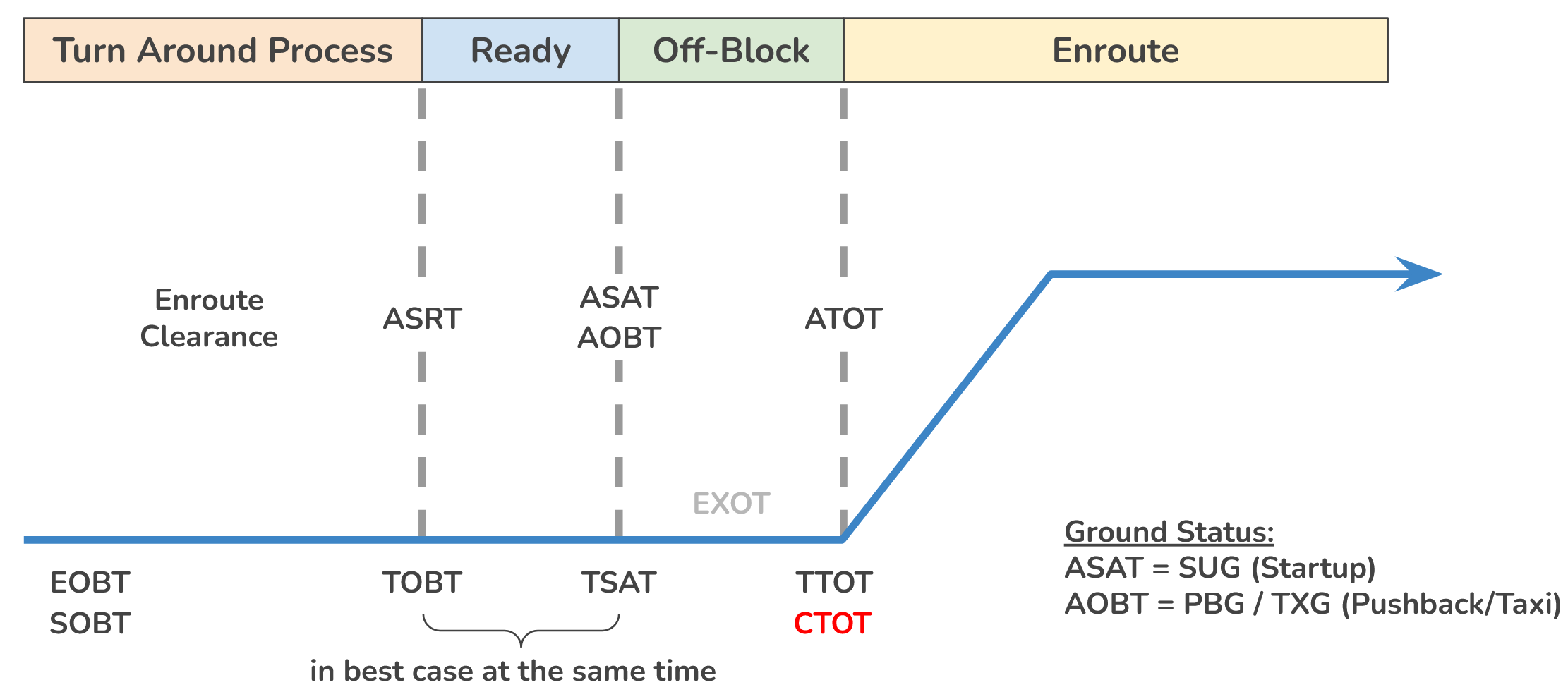
There are different times used in aviation for different purposes (long-term/short-term). In the following example there are different off-block times (OBTs).
| Abbreviation | Description | Meaning |
| EOBT | Estimated Off-Block Time | Time filed within the flightplan |
| TOBT | Target Off-Block Time | Outbound is ready and would like to go offblock |
| TSAT | Target Startup Approval Time | Outbound is allowed to go offblock (+/- 5 minutes) |
| TTOT | Target Take-Off Time | Individual calculated departure time |
| CTOT | Calculated Take-Off Time | Real Slot Time |
| CTOC | Calculated Take-Off Time Communicated | Fictional time that is communicated to the pilot |
| ASRT | Actual Startup Request Time | Outbound requests Startup at that time |
| ASAT | Actual Startup Approval Time | Startup approved by ATC |
| AOBT | Actual Off-Block Time | Off-Block Time (Pushback/Taxi) |
| ATOT | Actual Take-Off Time | Airborn Time |
The ACDM Process
The ACDM process on Vatsim will start with filing the flightplan and an EOBT.
When using the real mode, the EOBT is the first time used for calculations. As this time is not the most up to date one, all pilots have to set their TOBT (via the website or by ATC), when they expect to be fully ready for startup and pushback.
Based on the TOBT and the estimated taxi-out time (EXOT), the TTOT is calculated. This time is used for slots (CTOT) and if there is enough capacity at the runway. In case the TTOT is delayed, the TSAT will also be delayed accordingly.
When the outbound is ready, the ASRT is set. If the outbound is within the TSAT window (TSAT +/- 5 minutes), startup can be issued.
General
It is important to stick to the ACDM times that the system will work correctly and efficiently! The process is only as good as the times entered. Sometimes it's better to wait two minutes instead of setting the TOBT always to "now", as the system is based on preplanning. To many updates shortly before startup will reduce the effect of preplanning and distribution of delays!
With ACDM it’s still normal that it can get crowded at the holdingpoint as well. This is more efficient than having an empty holdingpoint while delays occur at the gate.
ACDM is not perfect! Delivery still has to think about whats going on at the airport and might have to take actions if required. It is mandatory to understand the process to do the correct actions.
Pilots can set their TOBT at vats.im/vdgs.
Calculations
There are different methods for the ACDM process to calculate the departure sequence. Within the Langen FIR the sequence and the runway capacity is calculated based on a "block mode". Each runway has a 10 minutes time interval with a specific capacity (e.g. three outbounds per 10 minutes).
The TSAT is calculated 35 minutes before the TOBT and is based on TOBT the resulting TTOT. It is possible that TTOT are at the same time, as it can‘t be predicted on the minute anyway.
The Block Mode offers more flexibility and efficiency at the airports within the Langen FIR especially during high traffic situation.
The Problem
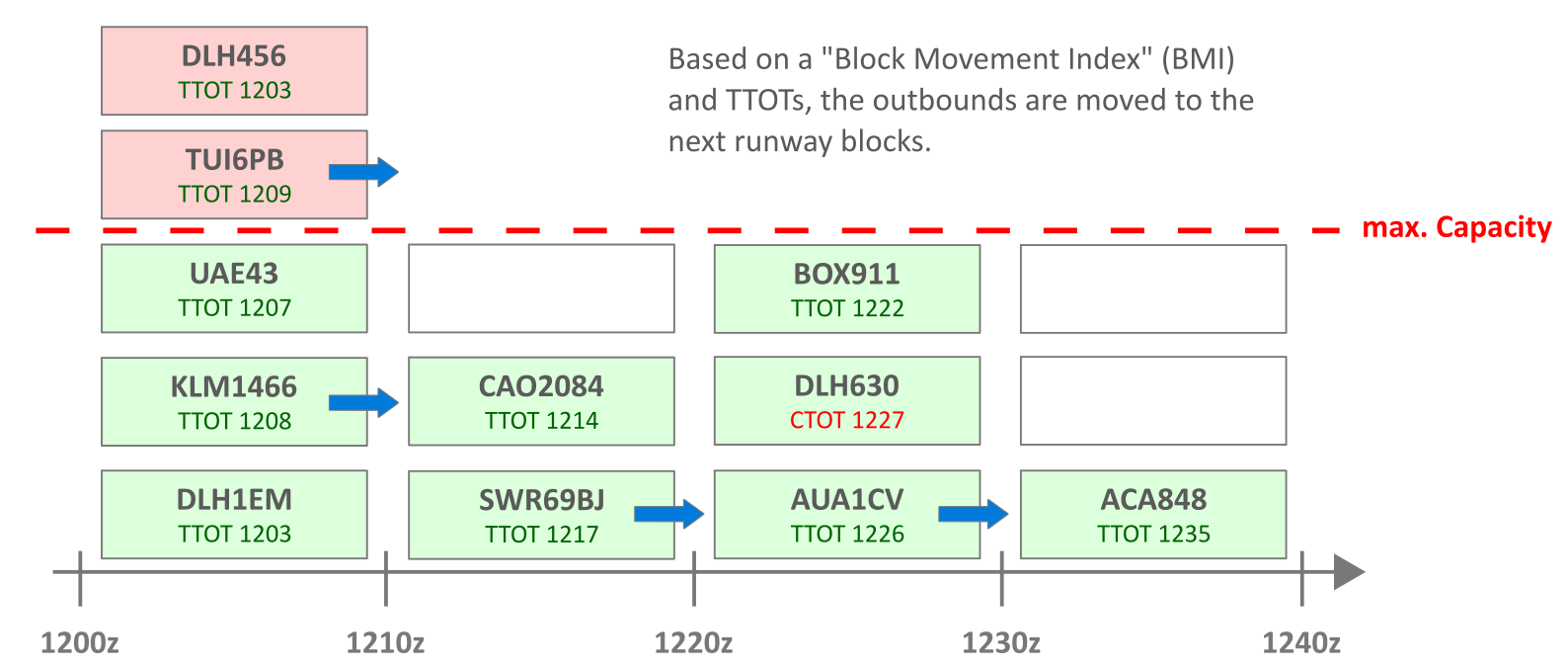
In the example below there is more demand on the 1200z - 1210z block as capacity available. TTOTs have to be moved to another block to stay within the capacity limits.
The Solution
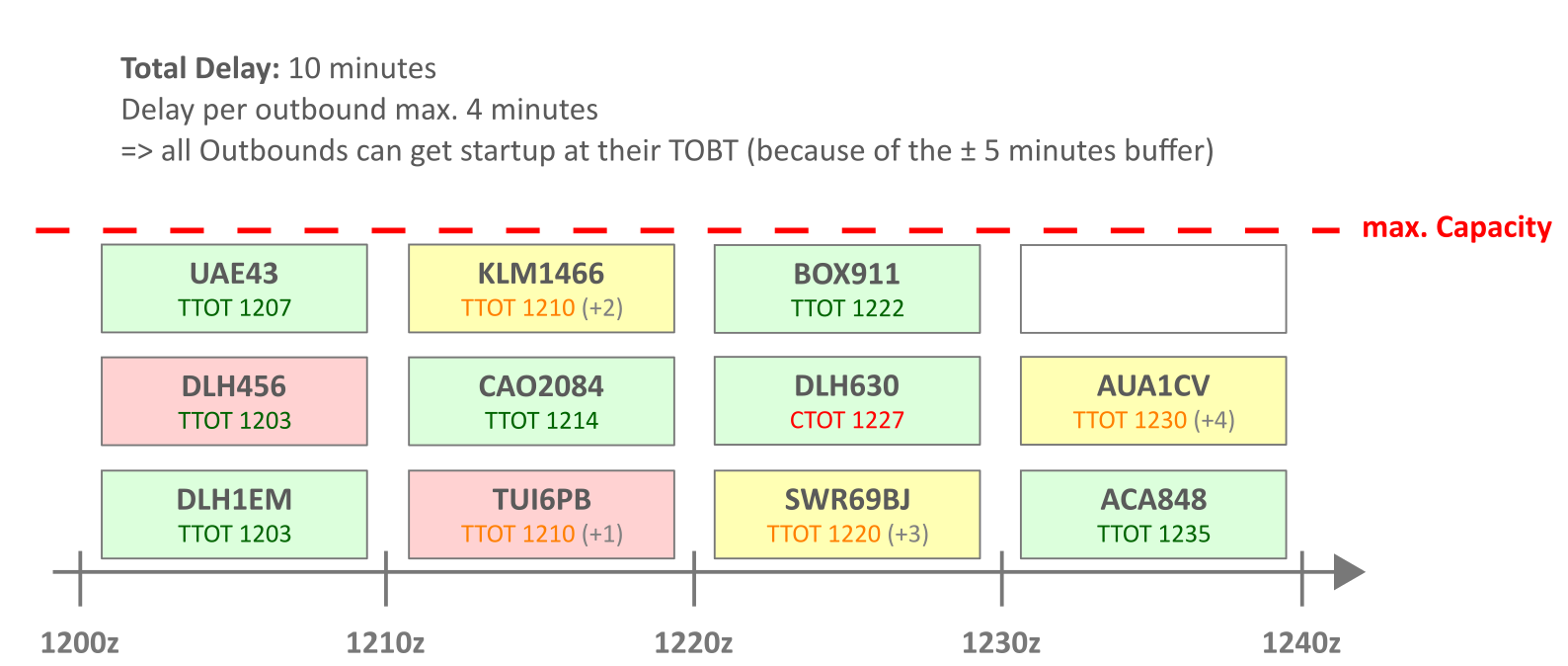
To have as less delay as possible, four outbounds are moved just a couple of minutes into the next block. Outbounds with a CTOT have the highest priority and will not be moved.
Inefficient Solution
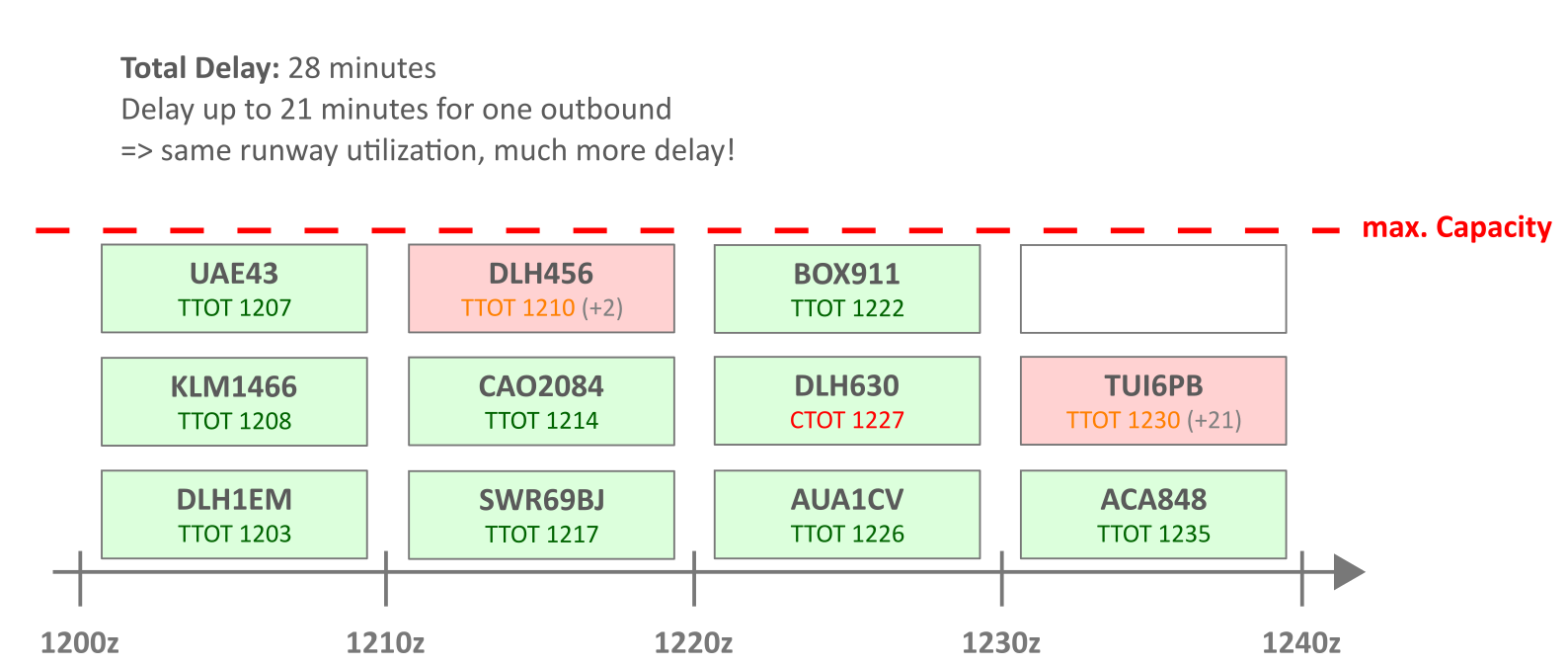
When moving outbound traffic on a „first come, last moved“ priority, the overall delay will be much higher.
The real Slot - CTOT
The word "slot" is used in different ways like the airport slot (long-term within the summer/winter schedule) or the departure slot (short-term). The "real" slot for the daily operations is the departure slot or know as CTOT.
The CTOT is assigned by vIFF based on the earliest possible TTOT. Therefor it's taking enroute and arrival capacity at the destination airport into account. Departure capacity is irrelevant for CTOTs! If flights do not have a CTOT and are delayed, it's due to departure airport runway capacity.
With a CTOT the takeoff is only possible between CTOT -5 and CTOT +10 minutes!
Ready Message: Always send a "ready message" (REA) when the outbound is ready and delayed due to a CTOT. This will improve the CTOT when possible.
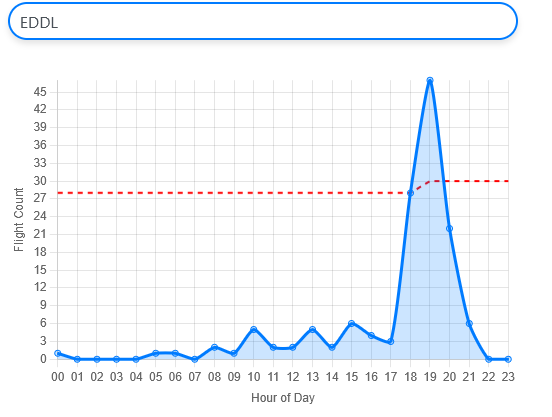
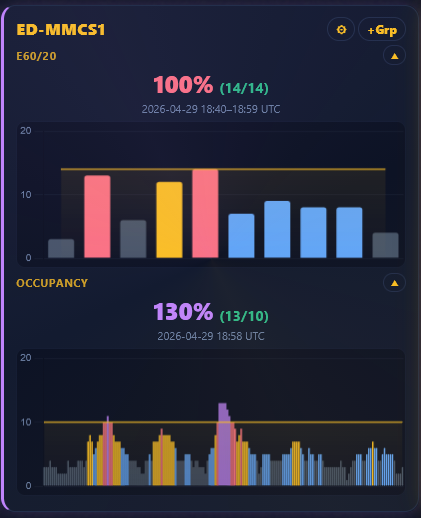
In case the CTOT is missed when the outbound is already offblock, a 10 minutes extention can be requested via the vIFF Website.
Limits of the System
The current ACDM & ATFCM system is not perfect, but that is not the claim of it. It already helps a lot to regulate the (high) amount of traffic within Europe. The more vACCs will participate, the better it gets.
Pilots departing on Unicom not complying with restrictions
A major issue within the ACDM procedure on VATSIM is that pilots departing on Unicom often ignore assigned restrictions or slots. Without active ATC, there is no authority to enforce CTOTs. This can lead to uncoordinated traffic flows and increased congestion during busy periods.
Waiting times for pilots flying to events or weeklies
Large events and weekly operations often create significant departure delays for pilots. While ACDM helps regulate traffic flow and prevents sector overloads, it can also result in long ground waiting times. This may reduce the overall enjoyment and attractiveness of participating in such events.
Capacity management for enroute sectors
Enroute sector capacities must be balanced carefully to avoid overloading controllers. At the same time, restrictions should not be too strict, especially when no ATC is online. The system should therefore maintain a balance between traffic flow efficiency and operational flexibility.
Outdated times (EOBT/TOBT)
Outdated or inaccurate EOBT and TOBT values are a common problem in the ACDM process. Pilots frequently fail to update their times after delays or operational changes. This reduces the accuracy of traffic planning and negatively affects slot allocation and departure sequencing.